
WELCOME BONUS 300%
UP TO €2000 + 100
FREE SPINS
UP TO €2000 + 100
FREE SPINS
Home → Games
Casino games at Casino-Slotoro
Columns and Dozens Pay 2:1 in Roulette
In French Roulette with La Partage, bets on even chances like Red/Black, Odd/Even, or Low/High offer payouts of 1:1. The La Partage rule, which refunds half the stake on a zero, applies only to these even bets. This rule effectively reduces the house edge on these specific wagers.
The house edge for even chance bets in French Roulette with La Partage is 1.35%. This is significantly lower than the 5.26% house edge found on American Roulette wheels, which feature both a 0 and 00 sector. The French version with La Partage also offers a 35:1 payout on Straight bets.
For comparison, American Roulette has a house edge of 5.26% on most bets, including Straight bets paying 35:1. While the payouts for inside bets are similar to European Roulette, the additional '00' sector doubles the house advantage on the American wheel. French Roulette, with its single zero and La Partage, offers a more favourable environment for players on even chance bets.
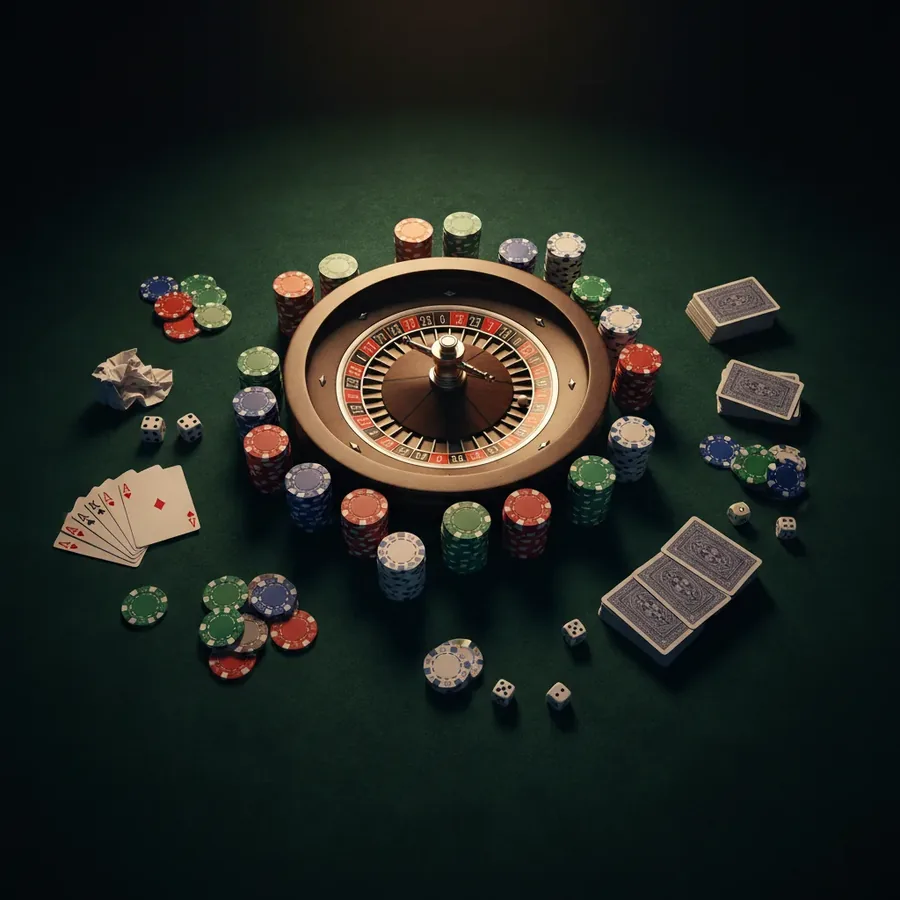
How Long Does a Roulette Round Take on Average?
However, the payout structure for bets like the Five Number Bet in American Roulette, which pays 6:1 and covers 5 out of 38 sectors, implies a quick resolution once the ball lands.
In French Roulette with La Partage, the average round time would also depend on player actions and betting speed. The RTP for even chances under this rule is 98.65%, with a house edge of 1.35%. This rule involves a refund on zero for even bets, affecting the payout calculation.
While specific durations per round are absent, the complexity of bets influences the pace. For instance, a Straight bet in European Roulette pays 35:1, while a Six Line bet pays 5:1. These fixed payout ratios do not inherently dictate the speed of a single game round but rather the potential return on investment.
Plein Pays 35:1, Cheval Pays 17:1
In American Roulette, a 'Plein' or Straight bet, covering a single number, pays 35:1. This bet is placed on one of the 38 sectors on the wheel, which includes numbers 1-36, 0, and 00. The RTP for American Roulette is 94.74%, with a house advantage of 5.26%.
The 'Cheval' or Split bet, which covers two adjacent numbers, pays 17:1 in American Roulette. This bet is one of several options available, alongside Street bets (11:1), Corner bets (8:1), and Six Line bets (5:1). The Five Number Bet, covering 0, 00, 1, 2, and 3, uniquely has an RTP of 92.11%.
These payout ratios are standard for American Roulette and reflect the increased house edge due to the double zero. For comparison, European Roulette, with only a single zero, offers the same 35:1 payout for a Straight bet but generally has a lower house edge of 2.70% across all wagers.
Hold or discard five cards: the decision
The decision to hold or discard five cards is central to Video Poker games, specifically in variants like Jacks or Better. In the 8/5 version, the RTP is 97.29% with a house advantage of 2.71%. This version pays 8 units for a Full House and 5 units for a Flush, per coin wagered.
Optimal strategy in Video Poker aims to maximize return by holding the best possible starting hand combination. For example, holding a pair of Jacks or better, or a potential straight or flush, is crucial. The payouts for hands in Jacks or Better 8/5 include a Royal Flush at 800 units and Four of a Kind at 25 units.
The strategy's impact on RTP is significant. For instance, Jacks or Better 9/6, which pays 9 units for a Full House and 6 for a Flush, has an RTP of 99.54% with a house advantage of 0.46% under optimal strategy. This difference highlights how player decisions directly affect the theoretical return.
Soft 17: the Ace counts 11 or 1
In Blackjack, the rule regarding 'Soft 17' refers to the dealer's hand containing an Ace and a six. The dealer hits on Soft 17 in some variations, which increases the house edge by 0.22 percentage points. This rule is a significant factor in the game's RTP.
The RTP for Blackjack varies based on rules. For instance, a game with 6 Decks, where the dealer stands on Soft 17 (S17), allows Double After Split (DAS), and Double Down (DD), offers an RTP of 99.54% with a house advantage of 0.46% when played with basic strategy. Blackjack payouts are typically 3:2.
Other rule variations also impact the house edge. For example, allowing a player to Resplit Aces (RSA) improves the RTP by 0.08 percentage points, while allowing Double After Split (DAS) improves it by approximately 0.14 percentage points. These nuances mean that understanding the specific rules, including how Soft 17 is played, is vital for players.
Game categories at a glance
| Category | Examples | Stakes From | Highlight |
|---|---|---|---|
| Slots | Sticky Bandits Trail of Blood, Book of Demi Gods 2, Money Train 3 | 0,10 EUR | thousands of titles |
| Table games | Roulette, Blackjack, Baccarat | 0,50 EUR | classic rules |
| Live casino | Infinite Blackjack, Lightning Blackjack | 0,20 EUR | real dealers |
| Jackpot games | Mega Moolah, Divine Fortune, Age of the Gods | 0,20 EUR | progressive pools |
| Instant games | Aviator, Plinko, Mines | 0,10 EUR | fast rounds |
| Video poker | Jacks or Better, Deuces Wild | 0,25 EUR | strategy based |
Read Statistics of Last 500 Rounds Correctly
Analyzing the last 500 rounds requires a consistent understanding of game mathematics, as exemplified by European Roulette's consistent 2.70% house edge across all bets. This edge is derived from 37 sectors, where payouts are structured as if there were only 36, ensuring a predictable return to player of 97.30%. This predictability allows for the statistical analysis of large round sets.
In contrast, the Sic Bo Small/Big bet, under Atlantic City rules, presents a house edge ranging from 2.78% to 33.33% depending on the wager. The Small and Big bets themselves offer a 1:1 payout. Understanding these variations is crucial for accurate statistical interpretation of round outcomes, as the underlying game mechanics directly influence the data.
Video Poker Deuces Wild - Full Pay offers a unique RTP of 100.76%, presenting a negative house edge of -0.76% for the player. This scenario, while mathematically advantageous, necessitates flawless optimal strategy and maximum bets for its realization, meaning that statistically, a player could expect to gain over time under ideal conditions.
How many sectors does the Game Show wheel have?
European Roulette features 37 sectors, including numbers 1 through 36 and a single zero. The RTP for this game is 97.30%, with a house edge of 2.70% across all betting types, including the simple 1:1 payouts for Red/Black or Odd/Even bets. This consistent edge is a fundamental aspect of its mathematical structure.
American Roulette, conversely, operates with 38 sectors due to the inclusion of both a single zero and a double zero. Despite the payout for a Straight bet remaining at 35:1, the additional sector increases the house edge to 5.26%, resulting in a lower RTP of 94.74%. This difference significantly impacts player outcomes over time.
The Five Number Bet on an American Roulette table covers five specific sectors (0, 00, 1, 2, 3) and offers a 6:1 payout. However, this specific wager carries the highest house edge on the table at 7.89%, with an RTP of only 92.11%. This makes it a less favourable option compared to other bets on the same wheel.
Keno and Bingo with RTP Between 92 and 95
American Roulette, with its double zero, presents a house edge of 5.26% and an RTP of 94.74%. This mathematical structure impacts all bets placed on the wheel, including even money bets like Red/Black or Odd/Even, which pay 1:1. The presence of 38 sectors, compared to European Roulette's 37, is the direct cause of this elevated edge.
The Five Number Bet, unique to American Roulette, encompasses sectors 0, 00, 1, 2, and 3, paying out at 6:1. This specific wager carries the highest house edge on the American wheel at 7.89%, translating to an RTP of 92.11%. This represents a significantly higher cost to the player than other standard roulette bets.
While not explicitly Keno or Bingo, the American Roulette Five Number Bet falls within the stated RTP range of 92% to 95% with its 92.11% RTP. This makes it one of the less favorable bets available in a casino setting due to its substantial house advantage.
6 Decks vs. 8 Decks in House Edge
Blackjack played with 6 decks, a dealer standing on Soft 17 (S17), Double After Split (DAS) allowed, and Double on Any Two cards (DOA) offers a 0.46% house edge, yielding an RTP of 99.54%. These rules, combined with a 3:2 payout for a natural blackjack, significantly benefit the player when employing basic strategy.
Conversely, when comparing to an 8-deck game, the reduction to 6 decks results in a marginal decrease in the house edge, approximately 0.02 percentage points. This means that a 6-deck game, under otherwise identical rules, provides a slightly lower house advantage than an 8-deck shoe.
In games utilizing 8 decks, such as Blackjack Insurance, the house edge can be considerably higher at 7.47%, with an RTP of 92.53%. This side bet, which pays 2:1, is generally advised against by basic strategy unless card counting indicates a significant advantage.
Double Down: double bet, only one card
The Double Down option in Blackjack allows a player to double their initial bet in exchange for receiving only one additional card. This maneuver is typically employed on two-card totals of 9, 10, or 11, where the chance of drawing a ten-value card to make a strong hand is high. Rules regarding when Double Down is permissible can vary.
In a Blackjack game with 6 decks and specific rules like S17, DAS, and DOA, the Double After Split (DAS) rule positively impacts the house edge by approximately 0.14 percentage points. This rule allows players to double down after splitting a pair, offering more strategic flexibility and reducing the house advantage.
For instance, Blackjack played with a single deck under classic rules, featuring a 3:2 payout for a blackjack, boasts a remarkably low house edge of 0.15% and an RTP of 99.85%. While the Double Down option exists in such games, the reduced number of decks significantly lowers the house edge compared to multi-deck variations.
French Roulette: La Partage Lowers to 1.35 Percent
French Roulette with the La Partage rule offers a house edge of 1.35 percent on even-chance bets. This rule applies when the ball lands on zero, returning half of the stake on bets like red/black or odd/even. The 'En Prison' rule provides the same house edge, but La Partage is typically preferred for its immediate refund.
Standard even-chance bets in French Roulette pay 1:1. Without La Partage, these bets would face the same house edge as other European Roulette variations. The reduction in house edge from an assumed higher value to 1.35 percent is a significant benefit for players on these specific wagers.
Internal bets in French Roulette, such as a straight bet, are not affected by the La Partage rule. These bets retain their standard payouts and house edge calculations, distinct from the even-chance bets that benefit from the zero-related refund mechanism. For example, a straight bet yields 35:1.
37 vs. 38 Sectors: One Zero Difference
European Roulette features 37 sectors, comprising numbers 1 through 36 plus a single zero (0). This setup results in a house edge of 2.70 percent across all bets placed on the wheel. The consistent edge is due to the payout structure aligning with the number of active sectors.
American Roulette, conversely, utilizes 38 sectors, including numbers 1 through 36, a single zero (0), and a double zero (00). This additional sector increases the house edge to 5.26 percent for most bets. Payouts are often similar to European Roulette, but the doubled zero inflates the casino's advantage.
The difference in the number of sectors directly impacts the house edge. The single zero in European Roulette ensures that payouts reflect 36 possible outcomes, while the double zero in American Roulette effectively halves the payout potential for every sector, thereby doubling the house advantage.
Straight, Split, and Corner in direct comparison
A straight bet on a single number in Roulette pays 35:1, meaning a 1 unit bet can return 36 units (35 profit + 1 stake). This bet covers one of the 37 sectors on a European Roulette wheel. The house edge on this bet is 2.70 percent.
A split bet, covering two adjacent numbers, pays 17:1. For example, a bet on 1 and 2 would yield 18 units total for a 1 unit stake. This bet type also falls under the 2.70 percent house edge on a European wheel.
A corner bet, covering four numbers arranged in a square, pays 8:1. This means a 1 unit bet can return 9 units (8 profit + 1 stake). Like straight and split bets, this wager also carries the standard 2.70 percent house edge on European Roulette.
Before Double Down: read the open dealer card
Blackjack with 6 decks, standing on soft 17 (S17), allowing double down after split (DAS), and offering 3:2 payouts has a Return to Player (RTP) of 99.54 percent. This translates to a house advantage of 0.46 percent, making it a favourable variant for players employing basic strategy.
The 'Double Down' option allows a player to double their initial bet after receiving their first two cards, receiving only one more card in return. This strategic move is most beneficial when the player's hand total is high and the dealer's upcard is weak.
Optimal Blackjack strategy, particularly regarding the 'Double Down' decision, is contingent on the dealer's visible card. Consulting basic strategy charts, which are mandatory for achieving the 99.54% RTP in the 6-deck game, will dictate when to double down based on the dealer's open card and the player's hand total.
Straight 35:1 Against the Chance of 1 in 37
A straight bet in Roulette, covering a single number, offers a payout of 35:1. This payout is consistent across European and French Roulette variants. The odds of hitting a specific number on a European wheel with 37 sectors are indeed 1 in 37.
The house edge for a straight bet on a European Roulette wheel is 2.70 percent. This is calculated by comparing the true odds (37 to 1) with the payout odds (35 to 1), resulting in the casino retaining an average of 2.70 percent of all wagers over the long term.
While the payout for a straight bet is 35:1, the actual probability of winning is 1 out of 37 possible outcomes on the European wheel. This discrepancy is the fundamental basis for the house edge, ensuring profitability for the casino over time.
Contact
Live - online chat
Banking




Providers











Slotoro Casino 2026